
While the battle space in previous NATO crisis response operations was often organised in a non-linear way (see Figure 3.5), warfighting, in particular kinetic combat operations, is characterised by linear battle space management. Figure 3.4 depicts a schematic extract of a warfighting corps’ battle space. Visible is approximately one third of a corps (“northern”) AO. The levels of command are indicated by the respective command posts’ military symbols and by the military symbol of the respective supporting CIMIC unit. To reduce complexity, the figure lacks a lot of other significant information. Several other coordination lines, units, activities, civil administrative boundaries and other information of the civil environment would overcrowd the sketch but are usually included on tactical maps. However, this figure serves as a basic sketch to better visualize CIMIC in the battle space and serves throughout this chapter for better orientation:
“where we are” and “what we talk about”.
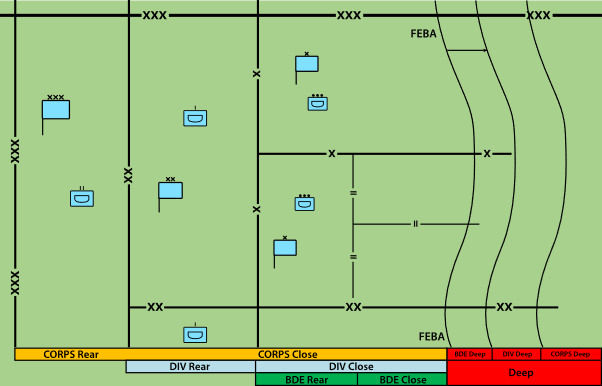
Figure 3.4 – Linear BSM
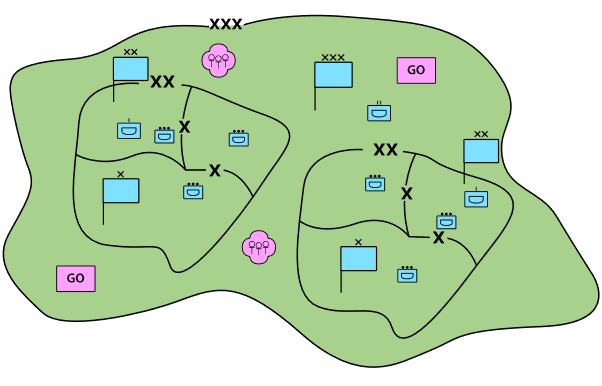
Figure 3.5 – Non-linear battle space management
There are five principal complementing comments about the type of BSM shown in Figure 3.4:
First observation: Obviously, CIMIC units are employed in the rear areas of corps, divisions and brigades. The mission of such CIMIC units depends on the tactical activity of the supported unit (offensive/ defensive/ stability or enabling activity).
Second observation: The deep is a challenge for CIMIC units since they cannot physically reach there but need to gain information about it, in particular for CIMIC contributions to targeting, for information on possible DPRE movements, and in particular to support offensive operations with information (CIMIC sites of significance, civil situation, etc.).
Third observation: The higher the level of supported command, the deeper reaches the deep into enemy-controlled territory. This means that CIMIC units and HQ personnel of divisions and corps need to identify ways to gain information on the civil environment of these deep areas. (e.g. indirect access through liaison networks, recce elements, special operations forces and information of the higher command level).
Fourth observation: Stability activities and enabling activities are the predominant tactical activities in the rear area for each level of tactical command, while offensive and defensive activities are conducted in the close area. Tempo, as one of the critical factors in kinetic combat operations (see above), determines the time for conducting stability activities in the respective rear areas. The time available will gradually decrease from corps to division to brigade – depending on the tempo of the respective tactical activity.
Fifth observation: In stability operations and during defence (block), the battlespace and AO boundaries remain relatively stable. However, in offensive operations and in dynamic defence (delay), rear areas increase or shrink and eventually boundaries and coordination lines will shift. This might trigger a handover/takeover of the “civil environment factors and actors” from one to another HQ. The CIMIC Staff of the respective units has to take care of that. This happens faster from brigade to division than from division to corps. Division and corps supporting CIMIC units have to expect a significantly extending rear area in offense and a significant shrink during delay operations before adjusting boundaries.
CIMIC support during offense activities (attack)
VIGNETTE: BRIGADE ATTACK
Situation:
A brigade (BDE), as part of a division, conducts an offensive operation to recapture an urban area previously occupied by enemy forces for several months. The operation is characterised by high intensity, rapid tempo, and limited time for interaction with non-military actors.
- Initial Situation (Pre-Assault / Deep Area)
The BDE prepares for the attack. The CIMIC element supports the staff through CFI:
Analysis of:
Population centers and density, Critical Infrastructure (energy, water, hospitals), Potential displacement movements (Displaced Persons, Refugees and Evacuees, DPRE) and identification of CIMIC sites of significance.
Assessment of:
Population attitude (supportive, neutral, hostile), for which the BDE uses information from higher headquarters (DIV/CORPS), existing liaison networks, intelligence and reconnaissance assets.
CIMIC Main contribution:
Enhancing targeting processes and minimizing civilian harm.
- Start of the Attack, with the start of the attack, the previously analysed area becomes the close area.
Challenges:
High tempo and time pressure, potential uncontrolled civilian movement, dynamic security situation
CIMIC Tasks:
Supporting Freedom of Manoeuvre (FoM) by:
Deconflicting military movements with civilian traffic, identifying and establishing civilian rally points and advising the commander on risks to civilians (“civilians in harm’s way”; compare cross-cutting topic Protection of Civilians, PoC).
CIMIC main contribution: Protection of civilians and immediate stabilization of the battlespace. Support Freedom of manoeuvre and Freedom of Action.
- 3. Rear Area Management
As the offensive progresses, the rear area expands.
Challenges:
Increasing displacement of civilians, overburdened or non-functional Host Nation (HN) structures, need for coordination between military and civilian actors
CIMIC Measures:
Establishment of civilian rally points, basic support structures and coordination with Host Nation authorities, IO and NGOs.
- 4. Key Takeaways
CIMIC is critical to Freedom of Manoeuvre (FoM) and Freedom of Action (FoA), even in high-intensity combat.
The focus shifts throughout the operation:
Deep Area: Information and analysis
Close Area: Protection and deconfliction
Rear Area: Stabilization and support
Time, tempo, and security constraints significantly limit CIMIC activities.
Attack implies the advance into the Deep, uncontrolled territory that has been controlled by the enemy before. While this has implications for all CIMIC levels of command, the BDE supporting CIMIC unit is the first CIMIC asset that is physically confronted with it. At the same time, it is the one that faces the most challenging operating environment along all critical factors: tempo, time available, lethality, intensity, and HN capability. Ont, the Rear will be extending during attack as long the boundaries of the BSM are not adjusted; this typically happens when a tactical objective is reached.
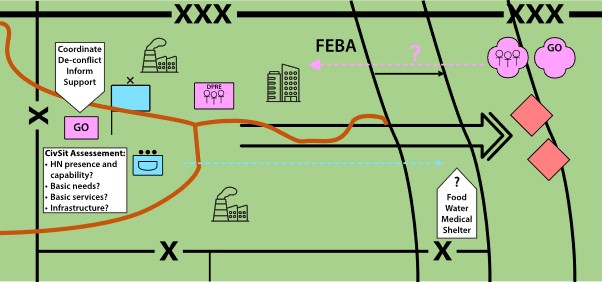
Figure 3.6 – Scheme of considerations for a CIMIC unit in support of a BDE during attack.
In the Deep:
Despite the challenge of not reaching physically into the deep, it is necessary to acquire as much information as possible to support the attack. Information requirements which cannot be answered by own sources through existing liaison networks, need to be sent as a Request for Information (RFI) to higher levels of command. CIMIC personnel on these levels might have better access to information about the Deep due to liaison networks on a higher level and more time available.
Critical information requirements for the Deep include (non-exclusive):
- Population centres and numbers of residents?
- CIMIC sites of significance?
- Critical National Infrastructure (CNI)?
- Population movements?
- Attitude of population? Particularly at regained territory which was controlled by the enemy.
- Unfriendly elements within the civil environment/resistance
Most of these requirements are provided by the higher command level.
CIMIC’s main contributions to the deep are informing manoeuvres and fires to support FoM/ FoA and mitigate harm. The information pertinent to items 1 through 6 also paves the ground for the Close as soon as the territory has been taken.
In the Close:
The Deep will eventually become the Close. The exact location of the CIMIC Units might greatly depend on the situation in the operating environment. However, it can reasonably be assumed that they are able to operate in the same area and under the same protection as supply elements of the BGs. Thus, they can follow the assault forces between the echelon forces and the reserve. Regarding CFI, the CIMIC personnel of higher echelons eventually need to support the BDE CIMIC units with confirmation of information and further A&A.
Aside from FoM/ FoA, stabilising the taken area and keeping it stable is of utmost importance. There are several factors that are relevant for the Close (formerly Deep) during attack:
- Uncontrolled population movement
2. Territory/ population:
a. Liberated occupied territory
i. HN presence and capability
ii. Posture of population
iii. Duration of occupation
iv. Enemy actions during occupation
v. Extent of replaced authorities
b. Enemy core territory
i. Attitude of population
ii. Security
iii. Resistance
iv. Cooperation authorities
v. Coordination of authorities for the purpose of FABN and services
3. Civil Situation
a. 7BLR
i. Minimum:
1. Food
2. Water
3. Medical
a. Immediate responsibility for “life, limbs, eyesight”
4. Shelter
5. Basic services
a. Security
b. Governance
6. Mitigate harm
a. Get people out of harms way
i. DPRE/ POW/ Captured Persons (CPERS)/ endangered persons
ii. Rally Points
7. Facilitate access to basic needs (FABN)
8. Populace control
Population movements within the BDE Care the most significant risk to FoM/ FoA during attack. In particular, since they are likely uncontrolled at the last minute. Further, it is difficult to inform the population beyond the FEBA on how to behave during the attack, and it is not sure that the enemy will evacuate the civilian population upfront.
In the worst case, the enemy will do the opposite, as examples from recent warfighting have demonstrated. Civilians may find themselves caught between the lines. In any case, soldiers on the frontline have to expect the sudden appearance of civilians in harm’s way. Making them aware of the next rally point in the Rear that they can reach relatively safely is important.
For this purpose, the CIMIC unit needs to contribute to the identification and communication of rally points in coordination with other stakeholders – if applicable, primarily with the HN or any other non-military organisation – or, if none are available at all, with the G3 and G5 only. Rally points are the first step in getting people out of harm’s way.
All the factors listed above need to be reconnoitered if the information is not available by other means or provided by a higher level of command. For the latter, the information still needs to be confirmed as feasible. The time factor during an attack does not allow deep reconnaissance. However, if timely information is required, CIMIC teams might conduct it as well and comprehensively as possible – even if not complete. Therefore, objectives of CIMIC-related reconnaissance have to be prioritised: Population centres (if feasible, considering force protection concerns) are of primary interest. Those that pose information gaps and/ or are most critical for decisions come first.
In the Rear:
The Rear must be stabilized and kept stable. During attack, the BDE rear area quickly extends since the BDE BGs are focused on the fight and cannot deal with an extending AO. The DIV rear area will only be adjusted step by step in intervals.
As it is further away from the Forward Edge of the Battle Area (FEBA), the security situation is more favourable than on the BDE AO; DPRE rally, and collection points must be established here, preferably with the HN. If HN authorities are not available or capable, the force needs to identify if there are IOs/ NGOs available and capable of establishing collection points. If not, the force needs to take care of it.
One main task for the CIMIC unit during attack is to prepare in coordination with HN or other organisations for the controlled and uncontrolled population movements, from the FEBA through the DIV AO into the more stable corps rear area.
Information provided needs to be confirmed, preliminarily processed and handled by rear elements.
However, the CIMIC team’s availability, tempo, and available time might restrict the feasibility of what can be done and what cannot. During high-tempo and deep attacks, the BDE CIMIC units will likely not be able to do much more than recce and report. Subsequently, CIMIC units of higher echelons will have to follow up on the situation and react to it.
Detailed coordination of these tasks is highly situation-dependent and will be part of the DIV planning and guidance by the DIV G9.
CIMIC support during defence (block and delay)
VIGNETTE: BRIGADE DEFENSE
A multinational BDE is tasked to conduct defensive operations in order to delay and disrupt an advancing enemy force along a key axis. The area of operations includes rural terrain with several towns and critical national infrastructure, as well as a significant civilian population. The BDE must prepare for prolonged defensive engagement while maintaining stability in its rear areas.
- Preparation Phase (Deep Area/ Shaping the Defence)
Prior to enemy contact, the BDE prepares defensive positions. CIMIC elements support planning through CFI:
Identification and analysis of:
Civilian population distribution in defensive sectors, Key infrastructure (bridges, roads, energy supply) relevant for defence, likely civilian movement routes (evacuation or spontaneous displacement), civilian infrastructure within engagement areas (risk of collateral damage), CIMIC Sites of Significance, population attitude and potential influence on operations
CIMIC Tasks (not exhaustive):
Advising on civil considerations in obstacle planning (e.g. roadblocks, demolitions), supporting the development of civil evacuation plans (in coordination with HN), contributing to targeting processes to minimize civilian impact
CIMIC main contribution:
Enabling the commander to integrate civil factors into defensive planning to reduce tactical friction.
- Preparation of the Defensive Area (Close Area)
Challenges:
Civilians remaining within defensive sectors, restrictions caused by military obstacles (minefields, barriers), risk of civilian interference with defensive operations
CIMIC Tasks:
Supporting Freedom of Manoeuvre (FoM), coordinate civilian movement around defensive positions Preventing interference with obstacle systems
Advising on civilian risks within engagement areas and implications of infrastructure use/destruction
Facilitating communication with local authorities
Civilian awareness of danger areas (as far as feasible)
CIMIC Focus: Deconfliction between civilian presence and defensive preparations.
- Enemy Contact and Defensive Engagement
Challenges:
Sudden displacement of civilians due to combat and damage to infrastructure and disruption of basic services, limited freedom of movement for CIMIC elements
CIMIC Tasks:
Providing continuous advice on:
Civilian presence in engagement areas, risks of escalation due to civilian harm, identification of safe routes for civilian movement.
CIMIC Focus: Mitigating civilian impact while supporting the defensive fight.
As combat continues, the rear area becomes increasingly important.
Challenges:
Growing number of displaced persons, strain on local resources and services, potential breakdown of Host Nation structures
CIMIC Measures:
Collection and coordination points for civilians, coordination with Host Nation authorities
IOs and NGOs
Support to:
Basic needs provision (FABN – Facilitate Access to Basic Needs)
If civilian systems collapse, military forces may need to temporarily support essential functions.
CIMIC Focus: Maintaining stability in the rear to sustain defensive operations.
- 4. Transition and Continuity
Depending on the outcome, the BDE may be tasked to counterattack, or continue area defence / delay operations.
CIMIC Role:
Reassessment of civil situation and infrastructure status and preparation for follow-on operations.
- 5. Key Takeaways
CIMIC is essential for integrating civilian factors into defensive planning and execution
Defensive operations require:
Early consideration of civilian movement and infrastructure
The main CIMIC effort shifts:
Preparation: Analysis and planning
Engagement: Risk mitigation and advisory
Rear: Stability and support
Ideally, defence activities happen after thorough preparation. Notwithstanding that defensive activities and operations can happen without prior proper preparation when tactical activities change from offensive to defensive (e.g. after the culmination of an attack or after seizing the objective in an offensive operation), defensive activities still provide the advantage that own forces know the terrain. Thus, CIMIC personnel know at least parts of the civil environment. In a prepared defence, the presence of the HN can also be expected to have almost full capability to control the populace, including evacuation and movements, and fulfill its obligations for basic needs and services.
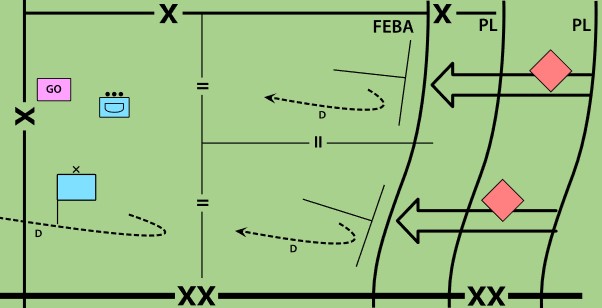
Figure 3.7 – CIMIC support to defence operations
In the Deep:
Critical information requirements (non-exclusive) for the Deep are:
- Population Centres?
- CIMIC sites of significance?
- Critical National Infrastructure (CNI)?
- Population movements?
One of the main tasks of CIMIC to activities in the deep during defense is informing fires/ targeting by considering the mentioned information requirements.
If defensive operations change from block to delay, the previous Close gradually becomes the Deep. Hence, all required knowledge and understanding should be developed upfront, before the start of the delay.
In the Close:
Defence offers the advantage of relatively stable boundaries in the BSM and proper presence of the HN with likely enough capabilities to manage the civil environment challenges. However, it must be considered that HN capabilities could be stressed and/ or partially be overstretched due to enemy hybrid activities in the AO. This risk will increase with the duration of the conflict. However, in principle, preparing for a defence operation offers the best circumstances for CIMIC to support shaping the civil environment. Nevertheless, this also depends on the time available – meaning early deployment will contribute to a higher level of preparedness.
In preparation for a planned or unplanned delay activity/ operation, all knowledge development and coordination requirements must be met prior to execution.
The following civil environment factors are critical for the defence:
- HN plans to control population movements
a. Planned evacuations (including cattle and removable infrastructure)
b. Planned evacuation routes and means
c. Planned hosting facilities for DPRE?
d. Plans to control spontaneous/ ad hoc/ last minute movements/ “self evacuations”
i. Rally points
ii. Collection points
2. Protection of CNI
3. CIMIC sites of significance
4. Resistance plans of HN
5. Plans to withdraw HN authorities and capabilities
6. Road conditions
The CIMIC Staff needs to facilitate the answers to these information requirements through their liaison network. Eventually, higher echelons can deliver some responses.
In the Rear:
During defensive operations, the rear has the same information requirements, roles, and tasks as those close to the front line. In the event of a delay, CIMIC Staff must prepare for the transfer of the civil environment due to the reorganisation of the BSM.